Painting Details
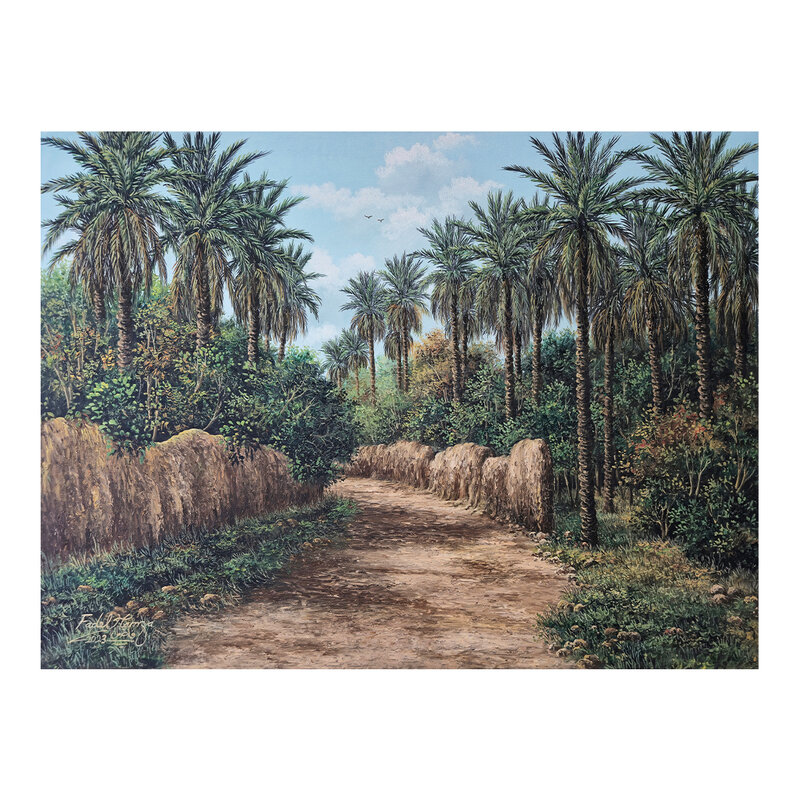
"Life by the River"
Fadel Hamza’s art preserves Iraqi rural identity by capturing the rhythmic interplay of sunlight, towering palms, and traditional mud dwellings.

Artist
Bahrain Art Gallery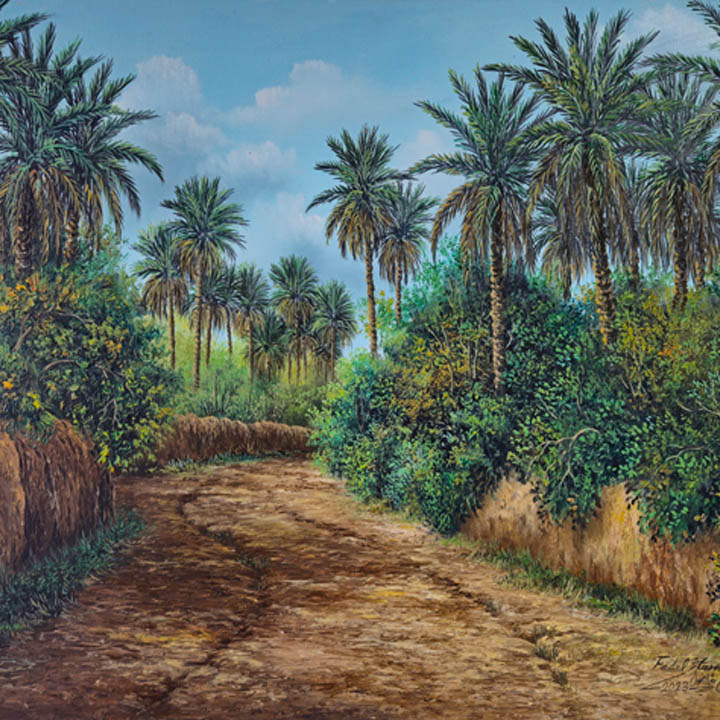
Category
LandscapeMedium
Acrylic on Canvas
Dimensions
80cm x 60cm
SKU
PAINT-000029
Inquire about this painting
Fadel Hamza’s work often functions as a visual archive of Iraqi rural identity, portraying the Reef as a sanctuary of cultural memory. These paintings move beyond simple landscape study by emphasizing the rhythmic interplay between light and shadow—specifically how the high Mesopotamian sun filters through dense palm fronds to illuminate the sun-dried mud walls. By focusing on the "unpaved" elements of life, such as the dusty tracks of agricultural vehicles and the quiet presence of the river, Hamza elevates everyday rural scenes into monumental symbols of national perseverance and natural abundance.